Home Blog Page 2

Enjoy Up To £20,000 in Scholarships at the University of Warwick: WMG Africa Scholarship

0

One of UK’s leading academic institution, the University of Warwick is offering a remarkable opportunity for eligible students from West Africa with the WMG Africa Scholarship, which provides up to £20,000 (N42 million) tuition fee discount for full-time MSc courses. This competitive scholarship is designed to support students pursuing postgraduate degrees in high-demand fields like Engineering, Technology, Business, Healthcare, and Innovation.

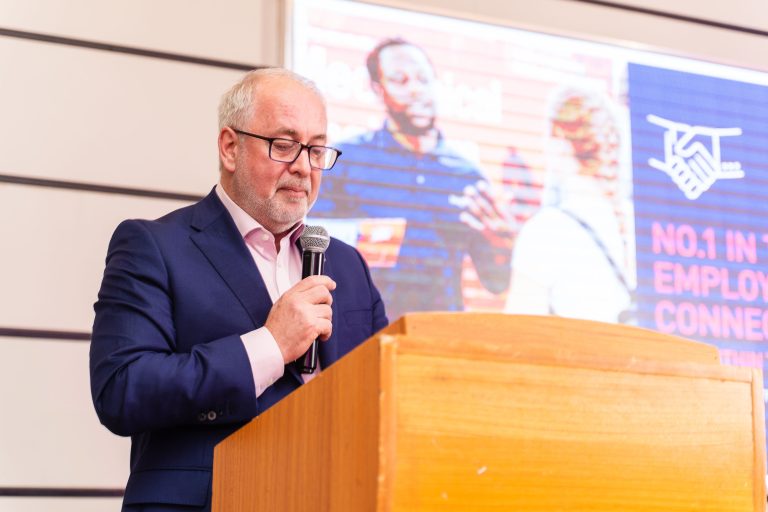
Dr. Anthony Olomolaiye, Assistant Professor with Specialisation in Programme and Project Management, and Head of Industrial, Management Education Group in the WMG Department at the school, said this in a recent visited to Nigeria and Ghana where he joined QS events in Abuja and Lagos. Dr. Olomolaiye also hosted alumni meetups and a WMG Information Day in Lagos, creating a dynamic space for past and prospective students to connect. Alumni shared personal stories and insights about how their time at the University of Warwick shaped their careers, offering real-world context to the value of a Warwick education.

The WMG Information Day provided attendees with a comprehensive overview of the wide range of MSc courses available at the University. Dr. Olomolaiye spoke about the WMG Department’s unique approach to combining academic excellence with practical, industry-relevant experience – an approach that prepares students for leadership roles across various sectors. He also shared details about the WMG Excellence Scholarships, which offer up to £15,000 in tuition support for eligible candidates.

Warwick continues to seek students passionate about solving global challenges. Through the WMG Africa Scholarship (up to £20,000 tuition discount) and the WMG Excellence Scholarships, prospective students can access funding to study full-time MSc programmes in the following areas:

  • Applied Management: MSc Engineering Business Management, MSc Programme and Project Management, MSc Supply Chain and Logistics Management, Management for Business Excellence
  • Business and Innovation: MSc Innovation and Entrepreneurship, MSc International Trade, Strategy and Operations, MSc e-Business Management (with specialisms in Digital Marketing, e-Commerce, Technology Management, and Data Science)
  • Digital Technologies & Machine Learning: MSc Applied Artificial Intelligence, MSc Cyber Security Engineering, MSc Cyber Security Management, MSc Games Engineering
  • Automotive Engineering & Machine Intelligence: MSc Sustainable Automotive Electrification, MSc Smart, Connected and Autonomous Vehicles
  • Healthcare Management & Technology: MSc Healthcare Operational Management

These courses are designed to equip students with critical skills and practical knowledge to lead in high-growth industries and tackle complex global issues.

If you missed the events, but are interested in joining University of Warwick’s thriving community, you can still explore available programmes and scholarship opportunities. Visit warwick.ac.uk/wmgmasters or email wmgmasters@warwick.ac.uk to learn more.

Transnational education as an alternative solution to Africa’s ‘japa’ problem

0

by Isime Esene

As Africa continues to assert itself on the global stage, its education systems must evolve to meet the demands of an interconnected world. Transnational Education (TNE), which is the delivery of education across national borders—presents a compelling model that can bridge the gap between global academic standards and the growing aspirations of African students.

The United Kingdom, being a longstanding provider of quality education for aspiring Africans, has witnessed a sharp decline in international students recruitment due to the recent change in immigration policy. Considering this significant challenge, the need for alternative pathways to quality international education has never been more urgent. TNE offers a strategic solution, bringing global education closer to home and equipping students with the skills and credentials to compete in an increasingly borderless workforce.

The Growing Demand for Quality Education

Africa is home to the world’s youngest population, with over 60% of its people under the age of 25. Yet, access to quality higher education remains a challenge. Many universities face issues such as overcrowding, limited funding, and outdated curricula that struggle to keep pace with market needs and global trends.

For decades, studying abroad has been the ultimate aspiration for many African students seeking better academic and career prospects. However, this route is increasingly inaccessible due to rising tuition costs, visa restrictions, and currency instability. The recent tightening of UK student visa policies further compounds this challenge, making it harder for African students to pursue education overseas.

TNE enables students to earn globally recognised degrees—sometimes without leaving their home countries. This model ensures that world-class education becomes open to a broader spectrum of aspiring students who want to acquire quality university education. 

What is Transnational Education?

Transnational education involves partnerships between institutions in different countries, allowing students to obtain degrees, diplomas, or certifications from foreign universities while studying in their home country. These programs take various forms, including:

  • Branch campuses where foreign universities establish satellite institutions in African countries.
  • Franchise programs in which African universities offer courses accredited by international institutions.
  • Distance learning and online education providing flexible access to top-tier programs.
  • Dual degree programs that allow students to earn credentials from both a local and a foreign institution.

Benefits of Transnational Education for Africa

1. Global Standards Without Geographic Barriers

TNE gives African students direct access to internationally accredited curricula, renowned faculty, and cutting-edge research. By embedding these programs within local universities, students benefit from global education without the financial and logistical challenges of studying abroad.

2. Strengthening Local Capacity

Africa’s job market is evolving, with increasing demand for professionals in technology, finance, healthcare, business & entrepreneurship, and engineering. TNE helps bridge the skills gap by exposing students to global best practices, making them competitive both locally and internationally.

3. Affordable Path to International Degrees

Tuition and living costs for overseas education are often prohibitive, particularly with fluctuating exchange rates. TNE offers a more cost-effective route, ensuring that high-quality education is not solely for those who can afford international travel and residence.

4. Reducing Brain Drain

A major challenge in African education is the mass exodus of talent to foreign countries. TNE allows students to gain global exposure while remaining in their home countries, increasing the likelihood that they will contribute their skills to local economies rather than seeking employment abroad.

5. Encouraging Innovation and Research

Exposure to diverse academic cultures and methodologies fosters innovation. By collaborating with international faculty and peers, African students can develop groundbreaking solutions tailored to local challenges, driving homegrown research and development.

6. Strengthening International Collaborations

TNE expands the global footprint of African universities by promoting partnerships with international institutions. This not only enhances institutional credibility but also attracts investment, research grants, and opportunities for faculty exchange.

The Current Landscape and Challenges

TNE is gradually gaining traction in Africa, with several universities forming strategic alliances. For instance, the African Leadership University (ALU) has partnered with institutions such as Glasgow Caledonian University to provide students with internationally recognised qualifications. 

Schools like the University of London (UK), University of Bolton (UK), University of Hertfordshire (UK), University of Nottingham (UK), Coventry University (UK), Arizona State University (US), California State University (US), and others already have some form of TNE structure in place for African students to take advantage of. However, for TNE to reach its full potential, certain challenges must be addressed:

  • Quality Assurance: Regulatory bodies such as Nigeria’s National Universities Commission (NUC) and South Africa’s Council on Higher Education (CHE) must enforce rigorous standards to ensure that transnational programs deliver genuine value.
  • Cultural Relevance: While TNE introduces global curricula, programs must be adapted to local contexts, particularly in fields like law, healthcare, public policy, and even architecture.
  • Awareness and Accessibility: Many students and parents remain unaware of transnational education options. Increased advocacy by regulators, administrators, thought leaders, research organisations, and other stakeholders can help bridge this gap.

Future of Transnational Education in Africa

As the continent’s economic and technological landscape evolves, education must keep pace. Transnational education is not just an alternative to studying abroad; it is a powerful tool for transforming the continent’s educational ecosystem and placing it at the forefront of global advancement.

By expanding access to global knowledge while keeping education locally relevant and affordable, TNE can shape a highly skilled workforce capable of driving Africa’s next wave of innovation and economic growth. If embraced and strategically implemented, transnational education could redefine the future of learning on the continent—ensuring that our brightest minds no longer have to cross oceans to access the best the world has to offer.


Vive Africa Partners Award-Winning Media Platform to Support International Educational Institutions

0

Vive Africa, a boutique marketing communications agency focused on education and enterprise, has entered into a strategic partnership with award-winning broadcast media giant, ChannelsTV. Vive Africa, which is dedicated to connecting prospective students in Africa with international educational institutions, aims to harness ChannelsTV’s unrivalled media dominance to extend their reach across the continent.

The award-winning media outfit boasts record numbers among Africa’s media brands on all popular social media websites, including YouTube, X, Facebook, Instagram, Threads, and TikTok, with nearly 17 million combined followers across all channels.

“We are excited by the immense potential of this partnership, which marks a defining moment for the future of education on the con tinent,” said Isime Esene, Lead Consultant & Strategic Adviser at Vive Africa. “Collaborating with a media powerhouse like ChannelsTV brings our vision to life, allowing us to reshape educational opportunities for young Nigerians. Together, we will build a transformative pathway that will inspire and uplift the next generation.”

International educational institutions looking to recruit bright young talents from Africa will undoubtedly profit greatly from this partnership. Renowned institutions such as Loughborough University, Lagos Business School, University of Sussex, University of Dundee and others have already benefited greatly from Vive Africa’s initiative to push their message further toward their African audiences. There are indications that other such institutions will be looking to add their names to the growing list of partner institutions.

With this partnership, forward-looking educational institutions can take advantage of Vive Africa’s experience and unmatched network to reach potential students across the continent.

Loughborough University VC Visits Nigeria to Foster Strategic Partnerships

0

Loughborough University Vice-Chancellor and President, Prof. Nick Jennings recently concluded a visit to Nigeria to develop strategic partnerships with key sector stakeholders. 

During the visit, Prof. Jennings met with stakeholders in the education sector, as well as government officials to discuss varying issues around sport, education, health & well-being, climate action, and inclusive communities.

“At Loughborough our research is about real-world impact, helping to make changes that improve the quality of life for individuals and the planet,” said Prof. Jennings while on a visit to the Governor of Lagos, Babajide Sanwoolu, who was represented by his Commissioner for Tertiary Education, Tolani Sule, and Commissioner for Youth & Social Development, Mobolaji Abubakre. 

“We are interested in equitable partnerships, so when we work in any region, we want to be clear that the research we do is beneficial to everyone. This is why a lot of our partnerships are co-designed and co-created by our local partners,” he added.

Following this meeting, the Vice-Chancellor later met with officials of the British Council and University of Lagos where he engaged in high level discussions with the institution’s Vice Chancellor, Prof. Folasade Ogunsola. He wrapped up his official visit to Nigeria with a networking dinner reception organised for alumni and offer holders of the University. 

Prof. Jennings was accompanied on his trip by Prof. Malcolm Cook, Dean of the School of Architecture, Building and Civil Engineering; Dr. Sola Afolabi, Senior Lecturer in Water & Environmental Engineering and University International Special Envoy to Sub-Saharan Africa; Dr. Hibbah Osei-Kwasi, Lecturer in the School of Sport, Exercise and Health Sciences and University International Special Envoy to Sub-Saharan Africa; and Florence Mutero, Global Engagement Officer, Africa.  

The Vice-Chancellor’s visit to Nigeria came on the heels of a similar one to Ghana where he met with the country’s Minister of Youth and Sport, Hon. Mustapha Ussif, to discuss Ghana’s sporting aspirations and ambitions based on Loughborough University’s reputation as the world’s best university for sports-related subjects.