Home Blog

Vive Africa Opens Nominations for Second Edition of Face of Education Africa

0

Vive Africa today announced the call for nominations for the second edition of Face of Education Africa. Described as the Forbes 30 Under 30 list in education, Face of Education Africa spotlights individuals at the forefront of efforts to leverage education – in its broadest sense – to drive initiatives, create opportunities, exchange ideas, and share knowledge.

The public now have between July 1st to 15th, 2025 to nominate inspiring individuals who have gone above and beyond to leverage the power of education to create impact locally or internationally.

The Face of Education Africa initiative celebrates young changemakers who understand that education is not just a tool for personal advancement, but a cornerstone for building the kind of future we all want — one defined by accelerated development and shared prosperity,” said Isime Esene, Lead Consultant at Vive Africa and Co-Chair of the Face of Education Independent Selection Committee (ISC).

By spotlighting their work, we are not just honouring excellence; we are reinforcing the idea that education remains our greatest lever for transformation across the continent.”

The Face of Education shortlist, whose final selection will be made by members of the ISC, are chosen based on specific criteria including – but not limited to – social impact, potential, scale, influence, and vision. 

The inaugural Face of Education Africa 2023 included personalities such as Sim Shagaya, Group CEO, uLesson Group and Chancellor at Miva Open University (Nigeria); Teresa Mbagaya, Principal at Imaginable Futures (Kenya); Mike Skosana, Co-Founder and Director, Crystal MG Trading and Projects (South Africa); and awardees from six other countries. 

Face of Education Africa is an initiative of boutique marketing communications agency, Vive Africa, targeted at highlighting education as a critical imperative for accelerated development.

Click http://b.link/FaceofEducation-2025 to make your submissions. For media inquiries, partnerships, or more information, please contact info@viveafrica.co.

Nigerian Students to Benefit as Loughborough University Launches Hologram Lectures

0

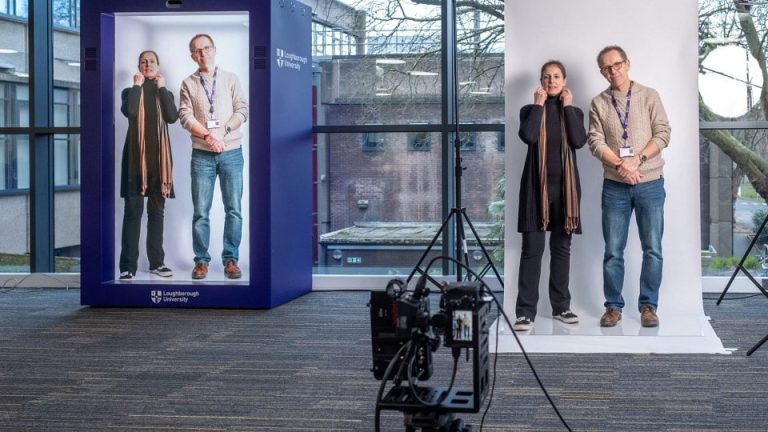
Nigerian students considering study in the UK are set to benefit from a groundbreaking new development at one of the country’s leading institutions, Loughborough University. The University has launched its DigiLabs (a £5.8 million suite of futuristic learning spaces) and with it, the UK’s first hologram lecture series.

At the heart of the DigiLabs is the Proto Hologram, a life-sized device that beams guest lecturers into classrooms from anywhere in the world. In its debut presentation, Dr. Johanna Hautala from the University of Vaasa in Finland, delivered a lecture to Loughborough students on Transforming Geographies of Knowledge in the Era of AI. Students interacted with her in real time, as if she were physically present.

For prospective students, this opens up new possibilities: access to diverse global expertise without borders, enhanced interactivity in lectures, and the chance to experience technology that is shaping the future of work.

Beyond holograms, DigiLabs are redefining what’s possible in higher education. Students can:

  • Create XR prototypes with their own VR headsets, designing experiences that would be impossible in traditional settings.
  • Step inside the human body using the Anatomage Table, which provides digitised 3D cadavers for medical and health sciences education.
  • Explore landscapes in 3D with the immersive wall, moving beyond maps and flat screens to navigate environments in vivid, interactive detail.
  • Learn cancer biology in virtual reality, stepping into the ‘Tumourverse’ to see how cells behave inside the body.
  • Build, program, and test robots, translating classroom coding into real-world applications.

These experiences are designed to ensure that students are not just taught with technology, but prepared to thrive in industries where AI, VR, robotics, and digital simulation will dominate.

“DigiLabs keep us at the forefront of teaching, learning and research, because it’s clear the next half-century will be shaped by these technologies, both at work and in the day-to-day lives of wider society,” Professor Sam Grogan, Pro Vice-Chancellor of Education and Student Experience. “I can’t see a role that won’t be impacted in some way by this world, these technologies, and the thinking that emerges from their use.

“Enabling our students to be conversant with this world as an integrated part of our everyday education, research and student experience allows us to prepare our students to thrive.”

For Nigerian students seeking an education that combines academic excellence with cutting-edge innovation, Loughborough’s DigiLabs provide a compelling reason to look beyond traditional classrooms.

Visit the Loughborough University website to apply and to learn more about what the institution has to offer!

Loughborough University Advances Innovation and Youth Empowerment Partnerships in Ghana

0

A Loughborough University delegation recently concluded their visit to Ghana with a focus on strengthening collaborations that support youth development, innovation, and global academic exchange.

The delegation led by Prof. Sam Grogan, Pro Vice-Chancellor for Education and Student Experience, accompanied by Amanda Daley, Professor of Behavioural Medicine, and Florence Mutero, Global Engagement Officer — held high-level meetings with Honourable George Opare Addo, Ghana’s Minister for Youth Development and Empowerment, and representatives of the Association of Ghana Start-ups.

At the Ministry, the team explored areas of alignment between Ghana’s youth empowerment agenda and Loughborough University’s strengths in behavioural science, education, and sport development. Both parties discussed capacity-building initiatives, student mobility, and co-designed research opportunities that can create transformative impact for Ghanaian youth.

“Young people are our shared global future, and innovation is the bridge that gets us there,” said Prof. Grogan. “By investing in collaborative education and entrepreneurship, we are investing in generations of problem solvers and change-makers.”

During the team’s meeting with Solomon Adjei, President of the Association of Ghana Start-ups, the Loughborough University team highlighted potential areas of synergy in training, incubation programmes, and research on youth-led businesses. The visit reinforced the University’s commitment to supporting grassroots innovation ecosystems across Africa.

“By partnering with Ghanaian startups and aligning with the country’s green economy priorities, we can unlock new opportunities for innovation and growth that drive transformative impact for young entrepreneurs,” Prof Grogan added.

In addition to government and innovation-focused engagements, the Loughborough University delegation also paid courtesy visits to key education and development stakeholders, including the Graduate Guidance Group and IDP, where they explored opportunities for student recruitment and guidance services. They also met with the Jospong Group of Companies, one of Ghana’s largest and most diversified holding companies, to discuss the role of industry-academic partnerships in driving research, sustainability, and workforce development.

The visit to Ghana followed the delegation’s earlier stop in Nigeria, where they met with the Honourable Minister of State for Education to discuss strategic alignment on STEM research, climate resilience, sport, student experience, and scholarship pathways. These strategic engagements in Nigeria and Ghana reaffirm Loughborough University’s commitment to co-creating long-term partnerships that support inclusive growth and global impact in West Africa.

Loughborough University Deepens Ties with Nigeria Through Strategic Education Partnership

0

A delegation from one of United Kingdom’s leading institutions, Loughborough University recently concluded a visit to Nigeria aimed at expanding academic collaboration and aligning with national development priorities.

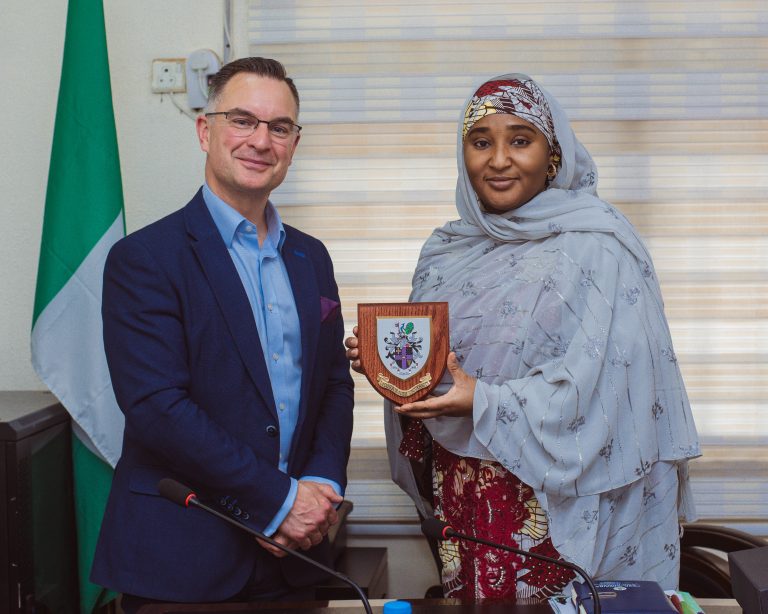
During the visit, the team – comprising Prof. Sam Grogan, Pro Vice-Chancellor for Education and Student Experience; Prof. Amanda Daley, Professor of Behavioural Medicine; and Florence Mutero, Global Engagement Officer – met with Dr. Suwaiba Said Ahmad, the Honourable Minister of State for Education, where they engaged in discussions on issues centred around research, innovation, and student development.

At the meeting, the delegation shared insights into Loughborough University’s globally recognised structure and approach, particularly its commitment to training students to solve real-world problems, advancing impactful research, and fostering international partnerships.

“For sustained infrastructure growth, collaboration is not a luxury, it is a necessity,” said Prof. Sam Grogan. “This partnership must be built on mutual learning and shared ambitions. It’s about laying a solid foundation that ensures the future of education and innovation in both countries.”

The discussions covered potential collaboration areas such as STEM research, innovation, climate change, net zero goals, sports, wellbeing, and student experience. The Loughborough University team also announced scholarship opportunities and highlighted their approach to co-creating systemic solutions that align with Nigeria’s vision for education and sustainable development.

In addition to the Ministry visit, the delegation held high-level talks with the Petroleum Technology Development Fund (PTDF), a leading scholarship and capacity-building agency in Nigeria. These engagements reinforced the University’s goal of supporting talent development through inclusive, long-term partnerships.

In her remarks, Dr. Suwaiba Said Ahmad lauded the University’s global impact and openness to collaboration, stating: “I deeply appreciate this visit and commend Loughborough University’s commitment to partnership. Our doors remain open for collaboration, and I look forward to exploring ways we can work together to empower our students and drive sustainable development.”

This visit forms part of Loughborough University’s deepening commitment to Sub- Saharan Africa, where it continues to co-develop research and academic partnerships with local institutions, public sector organisations, and development bodies.